Filing your Income Tax Return may sound complicated, especially if you are doing it for the first time. But in reality, ITR filing is simply the process of reporting your income, deductions, taxes paid, and other required details to the Income Tax Department.
Whether you are a salaried employee, business owner, freelancer, professional, or have income from other sources, understanding your tax responsibilities can help you avoid last-minute stress and unnecessary penalties.
What Is ITR Filing?
ITR filing means submitting your income details to the Income Tax Department for a particular financial year. Your return can include income from salary, business or profession, house property, capital gains, interest, and other sources, depending on your situation.
The Income Tax Department provides different ITR forms for different types of taxpayers. For example, ITR-1 is generally used by eligible individuals with certain types of income, while ITR-2 is used in cases such as capital gains or certain other income situations. The correct form depends on your income and financial activities.
Choosing the right form is important because filing the wrong form can create problems later.
Who Should File an Income Tax Return?
Not everyone has the same ITR filing requirement. The requirement depends on factors such as your total income, sources of income, and other conditions under the tax law.
Even when there is no tax payable in some situations, filing an ITR can still be useful. It provides an official record of your income and tax details and can be helpful when applying for loans, visas, or certain financial services.
The Income Tax Department has also clarified that the basic framework for who needs to file a return remains broadly similar under the new tax law.
What Documents Are Needed for ITR Filing?
Before starting your ITR filing, it is better to keep your important financial documents ready. The exact documents depend on your income sources.
Common documents may include:
- PAN and Aadhaar details
- Form 16, if you are salaried
- Bank account statements
- Details of interest income
- TDS details
- Investment and deduction proofs
- Home loan interest details, if applicable
- Details of capital gains, if applicable
- Business income and expense records, if you are self-employed
You do not always need to upload every document while filing the return. However, keeping proper records is important in case you need them later.
Why Is Timely ITR Filing Important?
One of the biggest mistakes people make is waiting until the last moment to file their return. Filing on time gives you enough opportunity to check your income, deductions, tax payments, and other details carefully.
If you miss the applicable due date, you may still be able to file a belated return, but late filing fees and interest may apply depending on your situation. For AY 2026–27, for example, the Income Tax Department states that a belated return can generally be furnished up to 31 December 2026, subject to the applicable conditions.
Timely ITR filing can also make it easier to track your tax records and process any eligible refund.
What Happens After You File Your ITR?
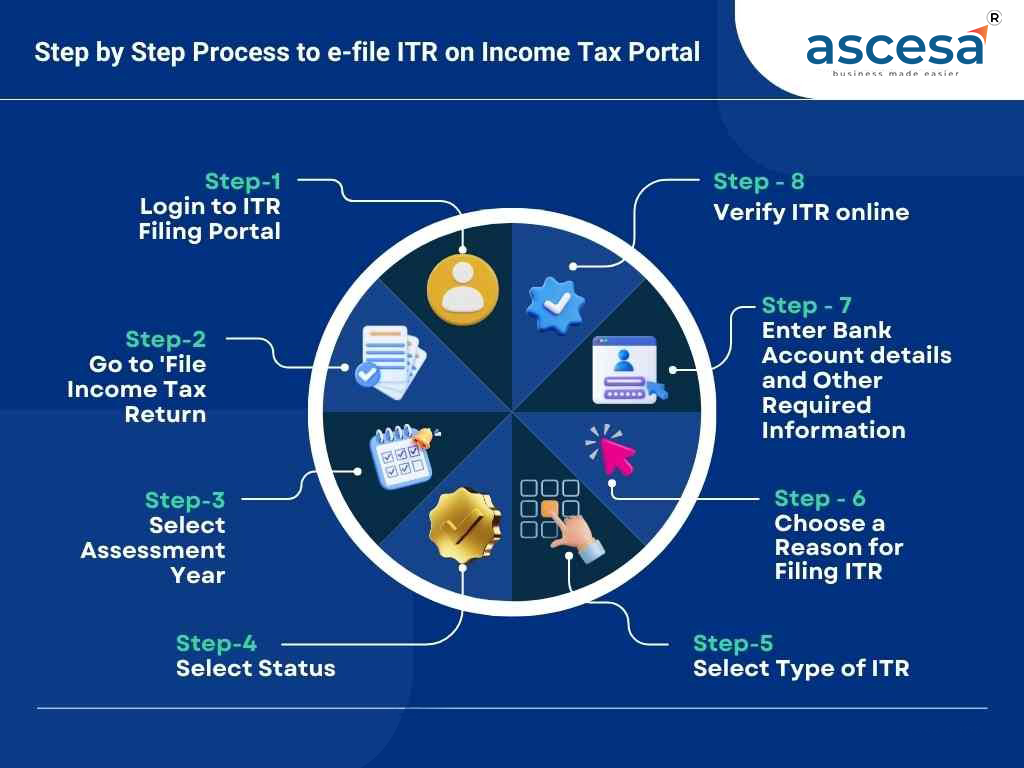
Filing the return is not always the final step. You also need to verify your return.
The Income Tax Department currently provides a 30-day period for e-verification or submission of ITR-V after uploading the return. If the return is not verified within the required period, it may be treated as invalid, subject to applicable provisions and condonation rules.
You can generally e-verify your return through the options available on the Income Tax e-Filing portal. Once the verification is successfully completed, you receive an acknowledgement.
So, after completing your ITR filing, always check whether the return has been successfully verified.
Common Mistakes to Avoid During ITR Filing
Small mistakes can sometimes create unnecessary confusion. Before submitting your return, check:
- Your PAN and personal details
- Bank account information
- Salary and other income details
- TDS information
- Interest income
- Deductions being claimed
- Tax already paid
- Correct ITR form
- Correct assessment year
- Final tax payable or refund amount
It is also a good idea to compare the information you enter with the available tax records before submitting your return.
Need Help With ITR Filing?
ITR filing does not have to be stressful. If you are unsure about which ITR form to use, how to report different sources of income, or how to claim eligible deductions, getting professional assistance can make the process easier.
At Ascesa Business Services, we help individuals and businesses with tax and compliance-related requirements. With proper guidance, you can complete your ITR filing accurately and keep your tax records organised.
For professional assistance with ITR filing, connect with Ascesa Business Services and get the right support for your tax requirements.
Frequently Asked Questions About ITR Filing
1. Is ITR filing mandatory if I have no tax to pay?
Not always. Whether you need to file depends on your income and other conditions specified under the tax law. Having zero tax payable does not automatically mean that filing is unnecessary.
2. What happens if I miss the ITR filing deadline?
You may still be able to file a belated return, depending on the applicable rules and time limits. However, late filing fees and interest may apply. For this reason, it is better to complete your ITR filing within the applicable due date.
3. Can I correct my ITR after filing it?
Yes. If you find an error in your filed return, you may be able to file a revised return within the applicable time limit. The rules and deadlines depend on the assessment year.
4. Do I need to verify my ITR after filing?
Yes. After uploading your return, you need to complete e-verification or submit ITR-V within the applicable 30-day period. An unverified return may be treated as invalid.
5. Which ITR form should I choose?
The correct ITR form depends on your income sources and financial situation. For example, eligible individuals with salary and certain other income may use ITR-1, while individuals with capital gains or other specified income may need ITR-2.
Conclusion
ITR filing is an important part of managing your personal or business finances. Filing your return correctly and on time can help you maintain proper tax records, avoid unnecessary complications, and claim eligible refunds or deductions.
Instead of waiting until the last minute, keep your documents ready and review your income and tax details carefully. If you are unsure about the process, professional guidance can help you complete your ITR filing with greater confidence.
For assistance with ITR filing, connect with Ascesa Business Services for professional tax support.