
Statutory audit for companies
Starting a business is exciting, but managing financial records and legal compliance is equally important. For newly registered companies, preparing for the first statutory audit can seem complicated, especially when financial documents are not properly organised.
A statutory audit for companies is an important legal requirement that helps ensure financial statements present a true and fair view of a company’s financial position.
Whether you operate a startup, small business, or growing private limited company, understanding the audit process can help you avoid last-minute difficulties and maintain financial transparency.
What Is a Statutory Audit?
A statutory audit is an independent examination of a company’s financial statements and accounting records by a qualified auditor.
Under the Companies Act, 2013, companies registered in India are generally required to have their financial statements audited annually, regardless of turnover, subject to applicable legal provisions.
The main objectives of a statutory audit for companies include:
- Financial accuracy: Verifying that financial statements are prepared correctly and supported by appropriate records.
- Legal compliance: Checking compliance with applicable accounting standards and relevant legal requirements.
- Transparency: Providing shareholders and other stakeholders with reliable financial information.
- Error identification: Identifying material misstatements, accounting errors, and potential financial irregularities.
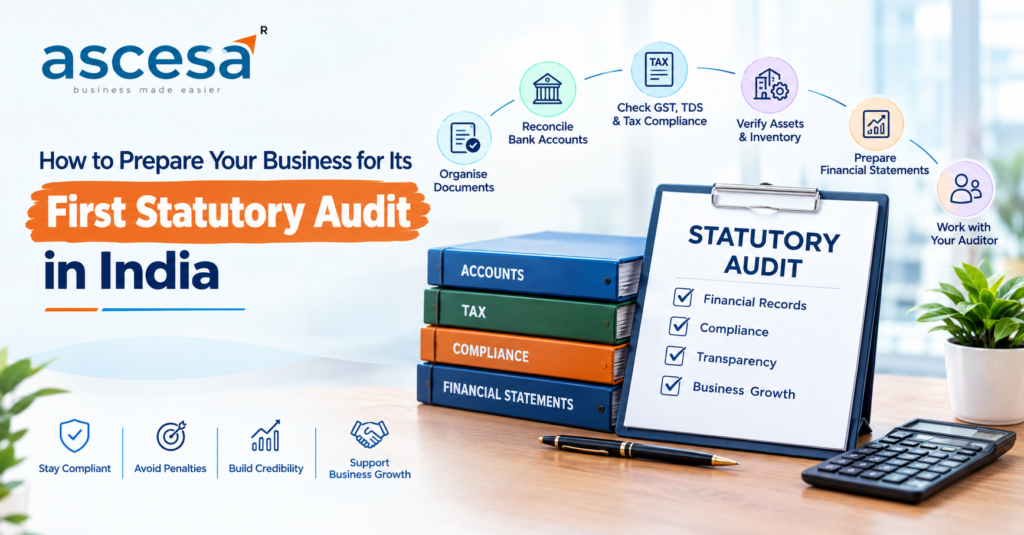
1. Maintain Accurate Accounting and Bookkeeping Records
The first step in preparing for a statutory audit is maintaining complete and updated accounting records.
Businesses should properly record sales, purchases, expenses, payments, receipts, and other financial transactions.
Professional accounting and bookkeeping services can help companies maintain organised financial records throughout the year.
Accurate bookkeeping reduces confusion during the audit and helps auditors verify transactions more efficiently.
2. Organise All Important Financial Documents
Auditors require supporting documents to examine the company’s financial transactions and statements.
Before the audit begins, businesses should prepare a statutory audit checklist containing:
- Sales invoices and purchase bills.
- Bank statements and reconciliation reports.
- Expense vouchers and payment receipts.
- Loan agreements and supporting documents.
- Fixed asset registers and depreciation calculations.
- Payroll records and employee payment details.
Keeping these documents organised makes the statutory audit for companies more efficient and reduces unnecessary delays.
3. Reconcile Bank Accounts and Financial Statements
Bank reconciliation is an important part of company audit preparation.
Businesses should compare their accounting records with bank statements to identify missing transactions, incorrect entries, or unexplained differences.
Companies should also review customer balances, supplier payments, outstanding liabilities, and advances.
Regular reconciliation helps ensure that financial statements reflect the company’s actual financial position.
4. Review GST, TDS, and Other Tax Compliance
Tax compliance plays an important role in maintaining accurate business financial records.
Before a statutory audit, companies should review their applicable GST returns, TDS deductions, tax payments, and related documentation.
Important checks include:
- Matching GST records with accounting books.
- Reviewing applicable TDS deductions and deposits.
- Checking outstanding tax liabilities.
- Verifying tax-related expenses and supporting invoices.
These checks help identify discrepancies that may require correction before the audit is completed.
5. Verify Fixed Assets and Inventory Records
Companies should maintain accurate records of machinery, equipment, computers, furniture, and other fixed assets.
Auditors may review asset purchases, disposals, depreciation calculations, and physical verification procedures.
Businesses dealing with physical goods should also maintain updated inventory records.
Proper asset and inventory management helps prevent accounting errors and supports reliable financial reporting.
6. Prepare Financial Statements Before the Audit
Financial statements are essential documents for completing a statutory audit for companies.
Businesses should prepare their Balance Sheet, Statement of Profit and Loss, Cash Flow Statement where applicable, and relevant notes to accounts.
These statements should be prepared according to applicable accounting standards and legal requirements.
Reviewing financial statements before sharing them with auditors helps identify missing entries, classification errors, and unusual balances.
7. Coordinate With Your Statutory Auditor
Clear communication with the statutory auditor is essential for a smooth audit process.
Companies should provide requested documents on time, explain unusual transactions, and respond promptly to audit queries.
For a newly incorporated company, the first auditor is generally appointed by the Board of Directors within 30 days of registration, subject to the applicable provisions of the Companies Act.
Early coordination helps businesses understand audit requirements and complete financial reporting responsibilities efficiently.
Why Is Statutory Audit Preparation Important?
Proper preparation for a statutory audit for companies offers several benefits.
Better financial management: Organised records help business owners understand income, expenses, assets, and liabilities.
Improved compliance: Regular reviews help companies identify gaps in accounting and statutory requirements.
Greater business credibility: Audited financial statements provide additional confidence to shareholders, lenders, and potential investors.
Reduced last-minute pressure: Preparing records throughout the year saves time during the audit process.
Frequently Asked Questions (FAQs)
1. Is a statutory audit mandatory for every private limited company in India?
Yes. Private limited companies are generally required to undergo an annual statutory audit under the Companies Act, 2013, regardless of turnover.
2. Who can conduct a statutory audit in India?
A statutory audit must be conducted by an eligible Chartered Accountant or qualifying audit firm appointed according to the Companies Act.
3. What documents are required for a statutory audit?
Common documents include financial statements, accounting ledgers, bank statements, invoices, tax records, payroll details, and supporting financial documents.
4. When should a company start preparing for its statutory audit?
Businesses should maintain accurate financial records throughout the financial year and begin detailed audit preparation well before annual reporting deadlines.
5. What happens if a company fails to complete its statutory audit?
Failure to meet applicable audit and financial reporting obligations can lead to penalties, compliance difficulties, and issues with statutory filings.
Conclusion
Preparing for your first statutory audit for companies becomes easier when your financial records, tax documents, and accounting systems are properly maintained.
From bookkeeping and bank reconciliation to financial statement preparation and statutory compliance, every step contributes to a smoother audit process.
At Ascesa Business Services Pvt. Ltd., we help businesses with accounting, bookkeeping, taxation, and company compliance support.